





We currently use several systems [...] to check the availability of alternatives.
Pharmacist, university hospital
Finding a replacement means moving between a master data tool, a wholesaler portal, a clinic system and, if the answer is abroad, a set of foreign databases. Each one answers part of the question and none of them talks to the next, so the same lookup is rebuilt by hand every time. The knowledge lives in the person doing it, not in a place the next colleague can reuse.
We contact suppliers but get delayed answers, and we are looking for a platform to check stock levels.
Staff member, pharmaceutical trade
Even once a candidate alternative is identified, whether it can actually be delivered is a separate question, and today that answer comes back slowly, one phone call or email at a time. Decisions get made on a guess about stock, and the guess is only confirmed after the order goes out. When it turns out wrong, the whole search starts again against the clock.
We need precise information on active substance, strength and dosage form for alternatives.
Buyer, pharmaceutical importer
A product that looks similar is not automatically a valid substitute. Active substance, strength and dosage form all have to line up, and for an import the authorisation details matter too. Pulling those facts together from scattered sources is slow, and a wrong match carries pharmaceutical and regulatory consequences that no one wants to own.
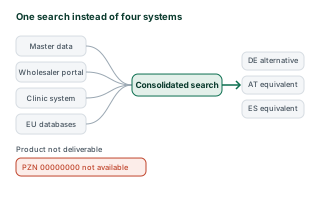
The substitution process starts with research, and today that research is spread across systems that do not connect. The Eisbergsuche queries 25+ databases in one pass, so you start from the product that is not deliverable and get candidate replacements without rebuilding the search by hand each time. That includes the German master data and the international databases in the same result set.

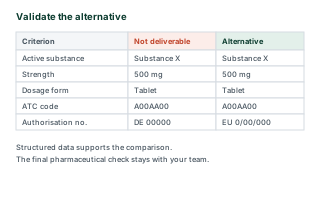
Identifying a candidate is not the same as proving it fits. The platform holds the structured fields that a substitution decision turns on, so you can line the alternative up against the original on the criteria that matter rather than eyeballing two product pages. The final pharmaceutical judgement stays with your team, the data is there to support it.
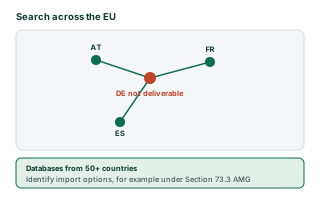
Sometimes the honest answer is that no German product is available, and the process has to cross a border. The international databases let you find equivalents in other EU countries and map them back to the German product, which is how customers identify import options to keep supply running. This is the step that separates a dead end from a solved case.
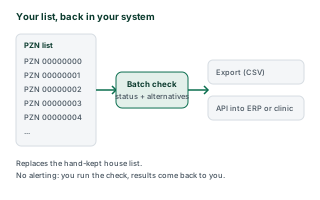
The job is not finished when the alternative is on screen, it is finished when it is in your ERP, your clinic software or your working list. Upload a PZN list and check the whole batch at once instead of one product at a time, then pull the result out by export or API. This is what replaces the hand-kept house list that goes stale the moment it is saved.
pharmazie.com handles the whole substitution job when a medicine is not deliverable: it finds candidate replacements, lets you validate that they actually fit, checks whether a supplier can deliver them, and sources across the EU when Germany cannot. Instead of hopping between systems that do not connect, you run the research in one consolidated search and carry the result back into your own tools.
The substitution process starts with research, and today that research is spread across systems that do not talk to each other. Here you search by PZN, by active substance or by ATC code, whichever you happen to have, and the platform returns candidate replacements from the German market together. One query replaces the tour of separate reference works that the job usually becomes.
Identifying a candidate is not the same as proving it fits. A safe swap turns on the active substance, the strength and the dosage form, and the platform holds those structured fields so you can confirm equivalence rather than assume it. That check is the difference between a substitution you can stand behind and one you have to walk back.
An alternative only helps if someone can actually deliver it. Through the MSV3 interface, the German standard for real-time availability, you query your connected wholesaler live at the moment you ask, including your individual prices, and you see when a supplier can only deliver part of the ordered quantity. When no German product fits, the international databases let you search for equivalents abroad, which for many customers is the reason they are on the platform at all.
The job is finished when the alternative is in your ERP or clinic software, not when it is on screen, so you can upload a list of hard-to-obtain PZNs and process the batch in one pass instead of querying each product. One honest limit belongs here: we do not send shortage alerts today. You come to the platform to run the check, we do not yet push you a notice when an item goes short or returns, and we would rather say that now than let you expect it.
The fastest way to judge fit is a 30-minute demo on your data. Bring a list of the PZNs giving you trouble this week and we will work an alternative through live.
More clarity, faster research, and faster decision-making.




.png)