






Key BenefitsThe ABDA Database German SmPC Drug Dictionary lists structured information on original pharmaceutical products and generics available in Germany, Switzerland, Austria and further countries. It brings together the Summaries of Product Characteristics (SmPCs) of the different Marketing Authorisation Holders in one searchable resource.
The Marketing Authorisation Holder Drug Dictionaries are updated twice a month.
The Summary of Product Characteristics (SPC or SmPC) is a document required within the European Commission before a medicinal product is authorised for marketing. It describes how the product should be used and reflects the agreed position reached during the assessment process.
Holding SmPC content as data is one half of the problem. The other is the lifecycle: variations under Regulation (EC) No 1234/2008, the chain from company core data sheet to reference safety information to national text, referral-driven label changes and the EU ePI roadmap. Our guide to SmPC compliance and lifecycle management sets out how those pieces fit together.
Every Summary of Product Characteristics follows a predefined structure, so indications, contraindications, dosage and side effects sit in consistent, machine-readable sections rather than free text.
Look up the Marketing Authorisation Holders behind more than 58,000 registered medicinal products in Germany, including their contact and registration details.
Each entry documents active ingredients, additives and derivatives, classified with ABDATA indications and ATC codes in both German and WHO notation.
Dosage forms are allocated to defined structures so products can be grouped by shared criteria. Detailed monographs add storage conditions and durability after opening or preparation.
Summaries of Product Characteristics are the regulatory backbone of every finished medicine, yet the information is scattered across thousands of individual documents in different formats. A structured drug dictionary turns those documents into a single searchable source that professionals can query by product, active ingredient or Marketing Authorisation Holder.
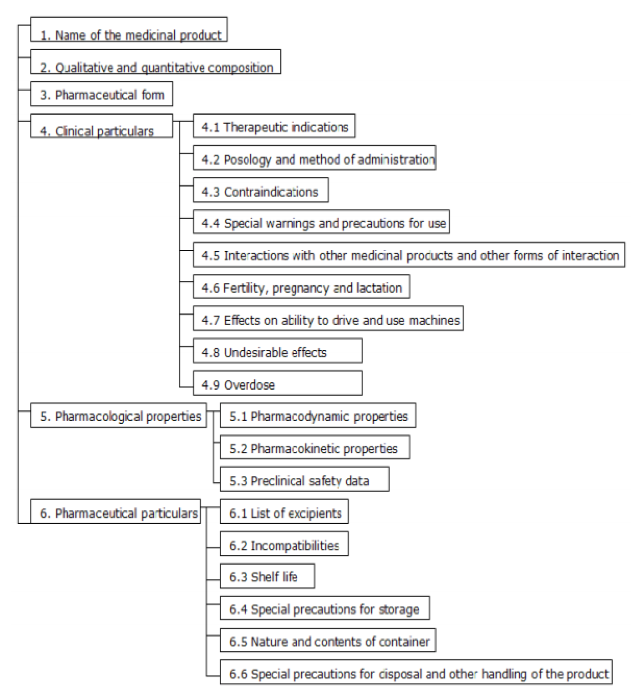
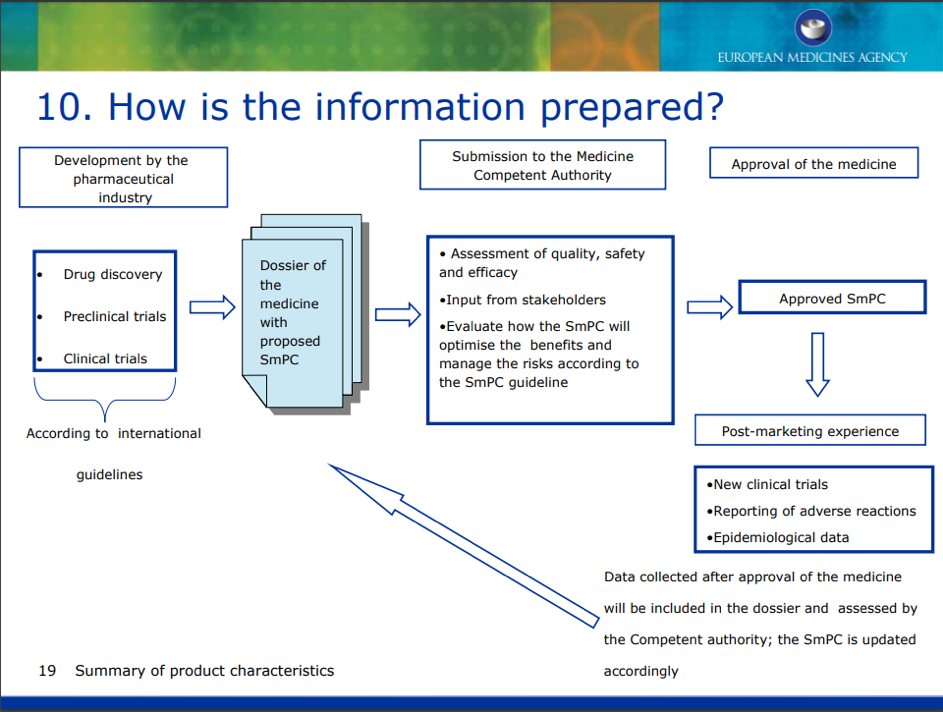
Information is presented according to a predefined structure. Certain details are relevant in more than one section, so cross-references are used instead of repeating the same text. This keeps each SmPC consistent and comparable across products and manufacturers.
An SmPC deliberately leaves out some material. Detailed scientific development data lives in the public assessment report. Non-approved indications are omitted where the Marketing Authorisation Holder has not claimed them or where the data did not demonstrate a positive benefit-risk balance. Specific issues without supporting data and general advice on treating particular medical conditions are also excluded.
The dictionary is compiled by ABDATA Pharma-Daten-Service and refreshed twice a month. Composition, classification, dosage form structure, storage and durability, standard advice sentences and full monographs are maintained as structured fields, so the content stays queryable rather than locked inside PDF leaflets.

.png)