





Key BenefitsThis database provides structured information on Austrian medicinal products, veterinary drugs, homeopathic and biological remedies, each classified according to the WHO ATC code. It gives professionals online access to product characteristics and package leaflets for Austrian medicinal specialities.
You can search for a medicinal product by trade name, Marketing Authorisation Number, Marketing Authorisation Holder, Pharmazentralnummer (PZN), active ingredients, ATC codes and further criteria.
The Austrian data is sourced from the Austrian competent authority´s and the database is updated monthly.
Every product is mapped to the WHO ATC code, including national ATC codes, so you can group and compare medicinal products across the Austrian market.
Find and match products by Marketing Authorisation Number, Marketing Authorisation Holder, PZN and active ingredients.
See whether a product is on the market and whether a shortage is reported, so supply questions can be answered quickly.
Open the Summary of Product Characteristics and the Package Information Leaflet for Austrian medicinal specialities directly online.
The WHO ATC code is the backbone of the Austrian Drug Dictionary. ATC stands for the Anatomical Therapeutic Chemical classification system, an ordered list of therapeutically usable active substances.
The classification was developed in 1976 by the European Pharmaceutical Market Research Association (EPhMRA) and adapted in 1990 by the WHO Collaborating Centre for Drug Statistics Methodology. The WHO updates additions, key or name changes, defined daily doses and deletions at each turn of the year.
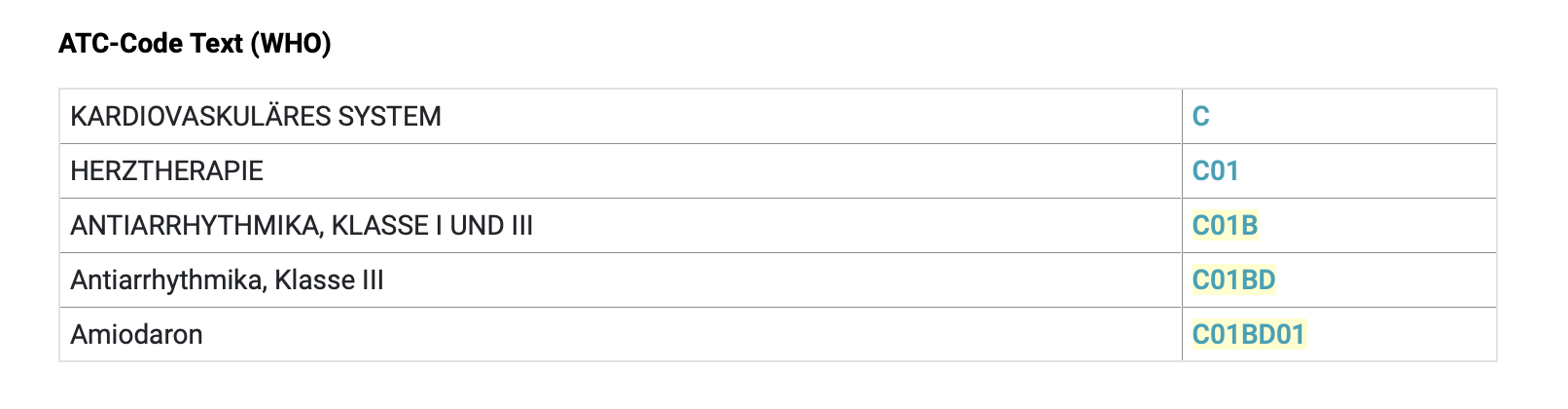
The ATC system has five levels. The first level holds 14 main groups organised by organ or system, the second and third levels describe therapeutic and pharmacological subgroups, and the fourth and fifth levels reflect the chemical substance.
For example, acarbose carries the code A10BF01: A for the alimentary tract and metabolism, A10 for drugs used in diabetes, A10B for blood glucose lowering drugs excluding insulins, A10BF for alpha glucosidase inhibitors and A10BF01 for acarbose.
The ATC system and the defined daily dose (DDD), the assumed average maintenance dose per day for the main indication of an active substance in adults, are recommended by the WHO as a measuring unit for epidemiological studies on drug consumption.

.png)