





We process data every two weeks to analyse price developments. We see the annoying processing step as the main problem that could be solved.
Data service provider for pharma
When price monitoring lives in a manual export and reconcile routine, every fortnightly cycle costs the same hours again. The work does not scale with the number of PZNs you follow, it multiplies. And because that step sits between the data source and the decision, it quietly delays everything downstream.
We are looking for the eBay of the pharma industry, for the lowest prices of competitors.
Managing Director, medical device importer
Competitor prices are scattered across sources, sold in fragments, or simply not laid out in one place. Without a single market view you compare what you happen to find rather than what is actually out there. The lowest price that matters for a tender is exactly the one that is hardest to assemble by hand.
We need insight into how prices have developed historically, not just the current status.
Analytics consultant for pharma
A current price answers what a product costs today, not how it got there. Reference pricing, launch benchmarks and pattern analysis all need the earlier values, and those are the ones scattered across old exports. When the series breaks, the analysis starts with reconstruction instead of insight.
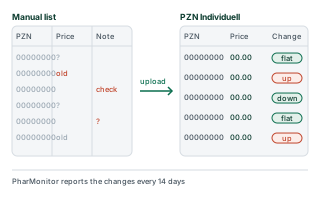
PZN individuell takes the list you already work with and turns it into one consolidated view instead of a manual reconciliation. PharMonitor then watches that base for you and reports what moved, so a large article set no longer has to be checked line by line.

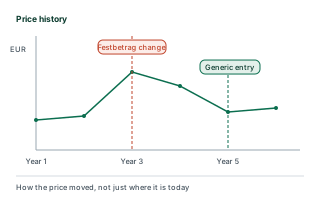
Price history is part of the product, so you can follow how a price developed rather than reading a single current figure. It is the layer you need for reference pricing, launch benchmarks and pattern analysis.
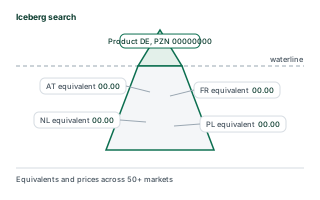
The iceberg search starts from one German product and surfaces its international equivalents, so the competitive picture is not limited to what you already know. Price data is available for Germany and some further EU countries, not EU-wide; more countries will be added in the coming months. The article master search with a competitor filter turns scattered lookups into a single market view.
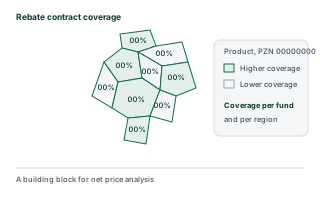
The rebate contract database shows which products are under contract with which sick funds, so coverage is something you can look up rather than piece together. Combined with the published price layer it gives you the building blocks for a net price analysis.
pharmazie.com is a B2B drug database that lets pricing, market access and purchasing teams track German drug prices and their competitors in a single search. You follow price changes, read the full price history behind a product, and check rebate contract coverage, without reconciling several exports by hand. Official German drug prices are updated twice a month, drawn only from official sources.
A single current figure tells you little about where a price is heading. Price history is part of every product record, so you can follow how a price developed over time rather than reconstructing it from old lists. That matters when you have to explain a rebate difference to a sick fund, or defend where your own product sits against the market.
Most monitoring work still runs as a fortnightly reconciliation in Excel. Upload the PZN list you already keep and the platform returns a consolidated view of what changed: prices, status and the products that moved. The Pharmonitor tracks the German market on a fixed cycle, so the manual processing step stops being the job.
A price only means something next to the alternatives. Start from one German product and the parallel search surfaces its equivalents and their prices, including reimports listed with their own PZN, so you compare the original, the generics and the import in one place. The rebate contract database shows which products sit under contract with which funds.
Two honest limits. You will not see a price before the data provider officially publishes it, which typically happens shortly before it takes effect. And this is not a market research service: sales volumes, market shares and channel figures are not what these databases hold. What you get is the published price picture and its history, deeper and in one place.
The fastest way to judge fit is a 30-minute demo on your data, not ours. Bring the PZN list you monitor today and we will run it live.
More clarity, faster research, and faster decision-making.




.png)