




Key BenefitsThe AMNOG HTA Benefit Assessment Database brings together the German early benefit assessment under §35a SGB V in a single, searchable place. Its centre of gravity is the dossier: the pharmaceutical company submission, the appropriate comparator therapy it was written against, the IQWiG evaluation of it, and the verbatim record of the oral hearing. It covers ongoing and completed procedures.
This page is about access to the material. The procedure that produces it, the two stages, the statutory deadlines and the six Zusatznutzen categories, is set out in our glossary entry on AMNOG.
The benefit assessment sets the reimbursement amount, but that amount is only one layer of what a medicine actually costs in Germany. Statutory discounts, rebate contracts and the regulated margin chain sit around it. Our overview of pharmaceutical pricing in Germany explains how these layers combine.
The database draws on G-BA (Gemeinsamer Bundesausschuss) data from Berlin and is updated monthly, after each scheduled G-BA plenary meeting, so procedures, deadlines and resolutions stay current.
Full-text search runs across G-BA resolutions, their written reasons and the IQWiG benefit assessments, partially translated into English. A direct connection to the German drug pricing data lets you move from a procedure to the product via PZN and structured criteria.
Each procedure carries its full record, so you can see not just the outcome but how it was reached. Dossiers, comparator therapy, IQWiG evaluation, hearing minutes and the reasoned resolution sit together for every assessment.
The assessment outcome drives the price, so the database keeps the commercial side in view: mandatory discounts, negotiated amounts, European reference pricing and full price history, all exportable for your own analysis.
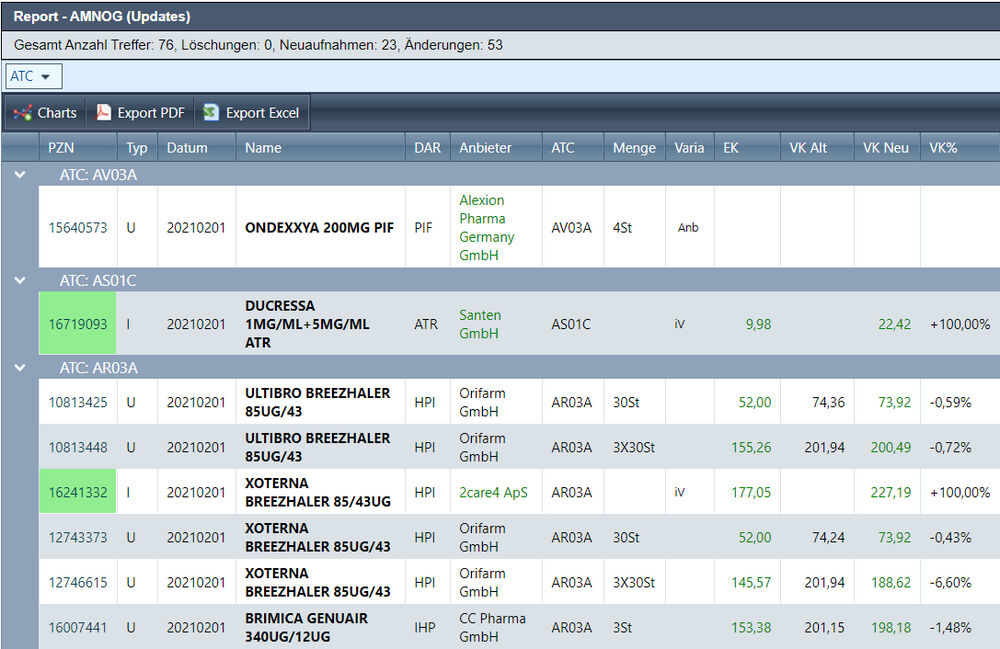
Beyond the raw record, the database plugs into daily work. A twice-monthly AMNOG update report via Pharmonitor, per-PZN price histories, custom uploads and keyword search within the ABDA Database keep teams current without manual tracking.
The AMNOG benefit assessment sits at the centre of German market access, and understanding its shape helps explain what the database captures. Before the 2011 AMNOG, Germany operated under free pricing with full reimbursement. The AMNOG replaced that with a structured assessment of additional benefit, and the EU Health Technology Assessment Regulation (EU) 2021/2282, in force since 2022 and applied from January 2025, adds a European layer on top.
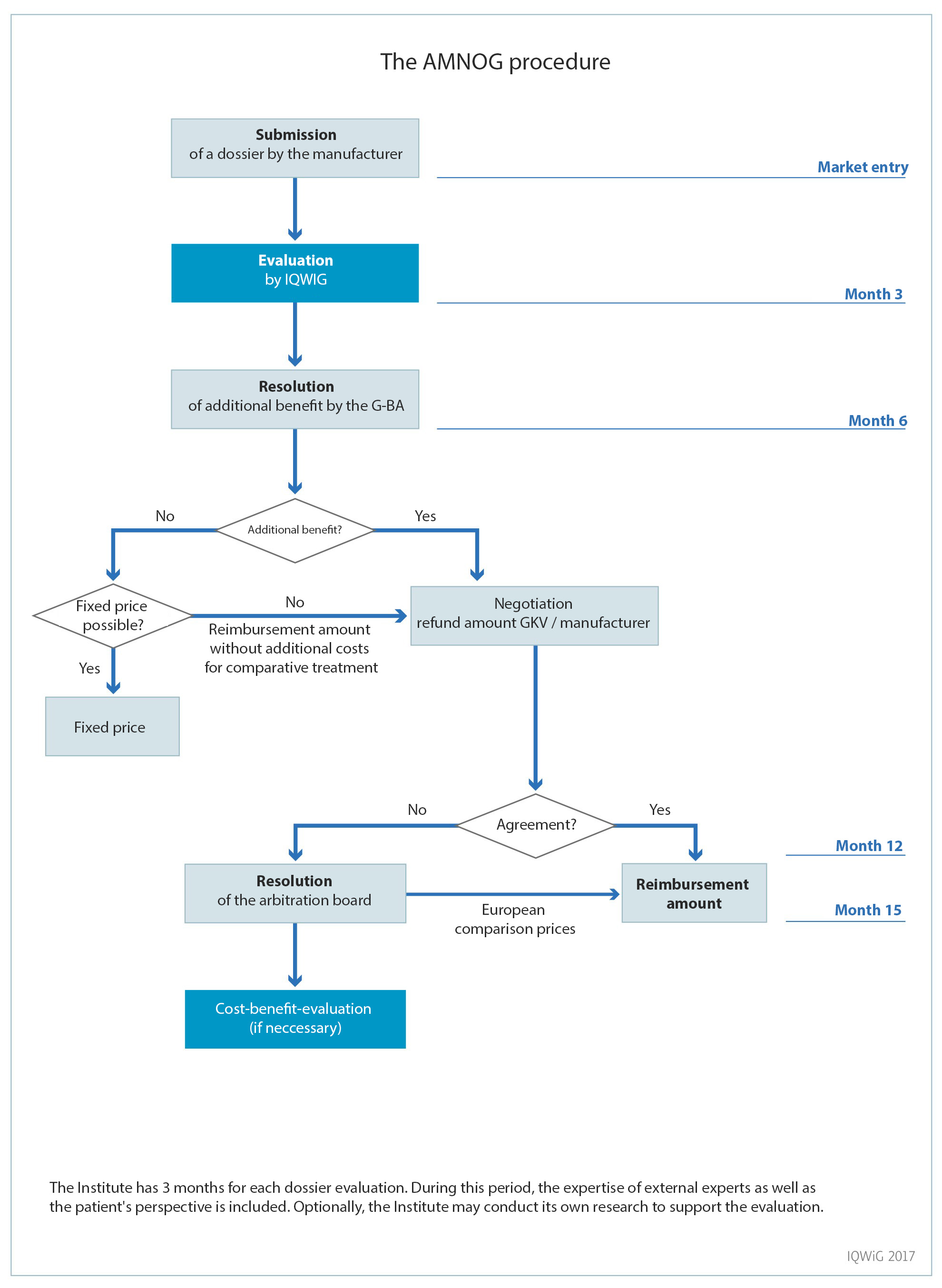
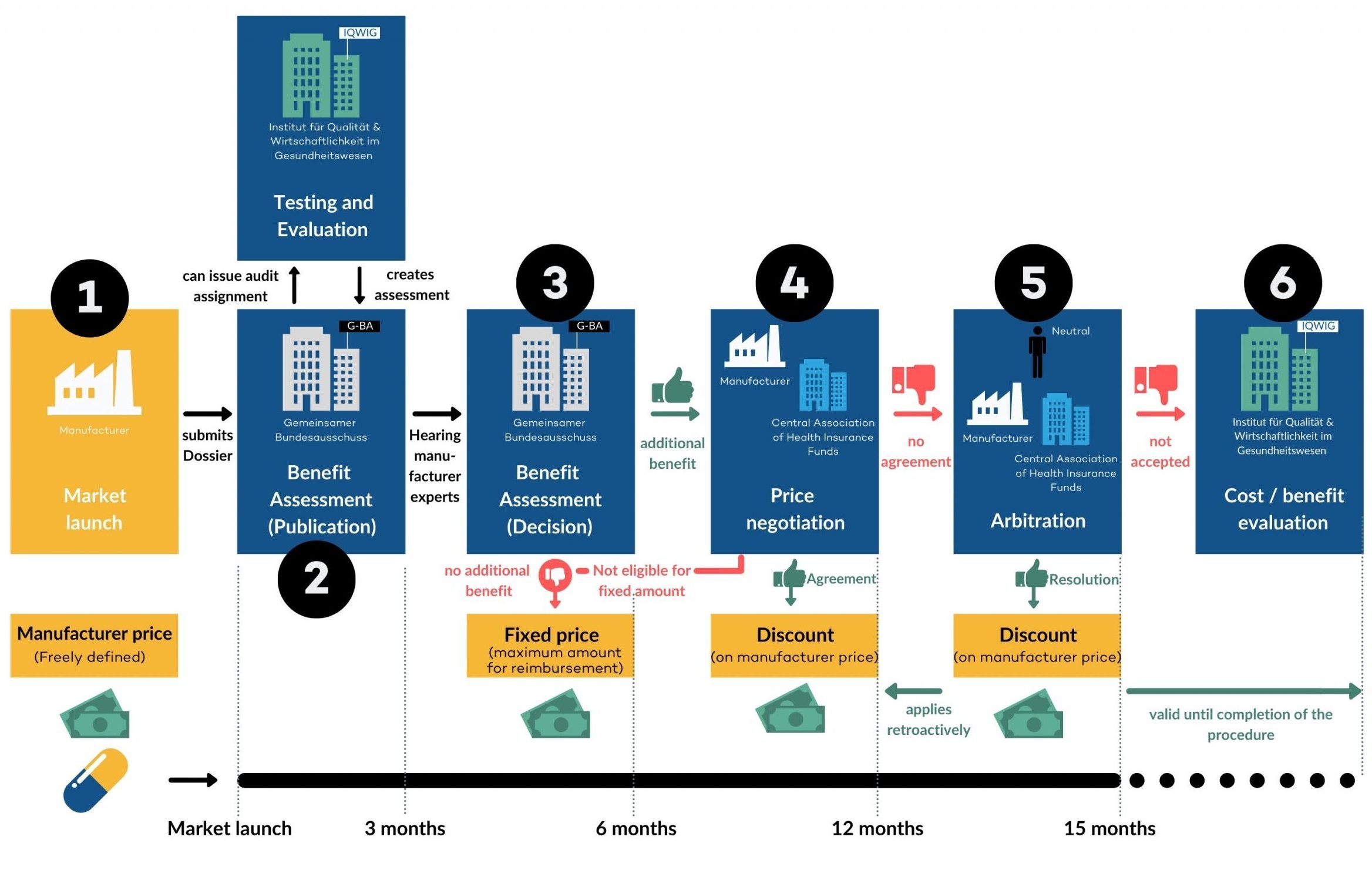
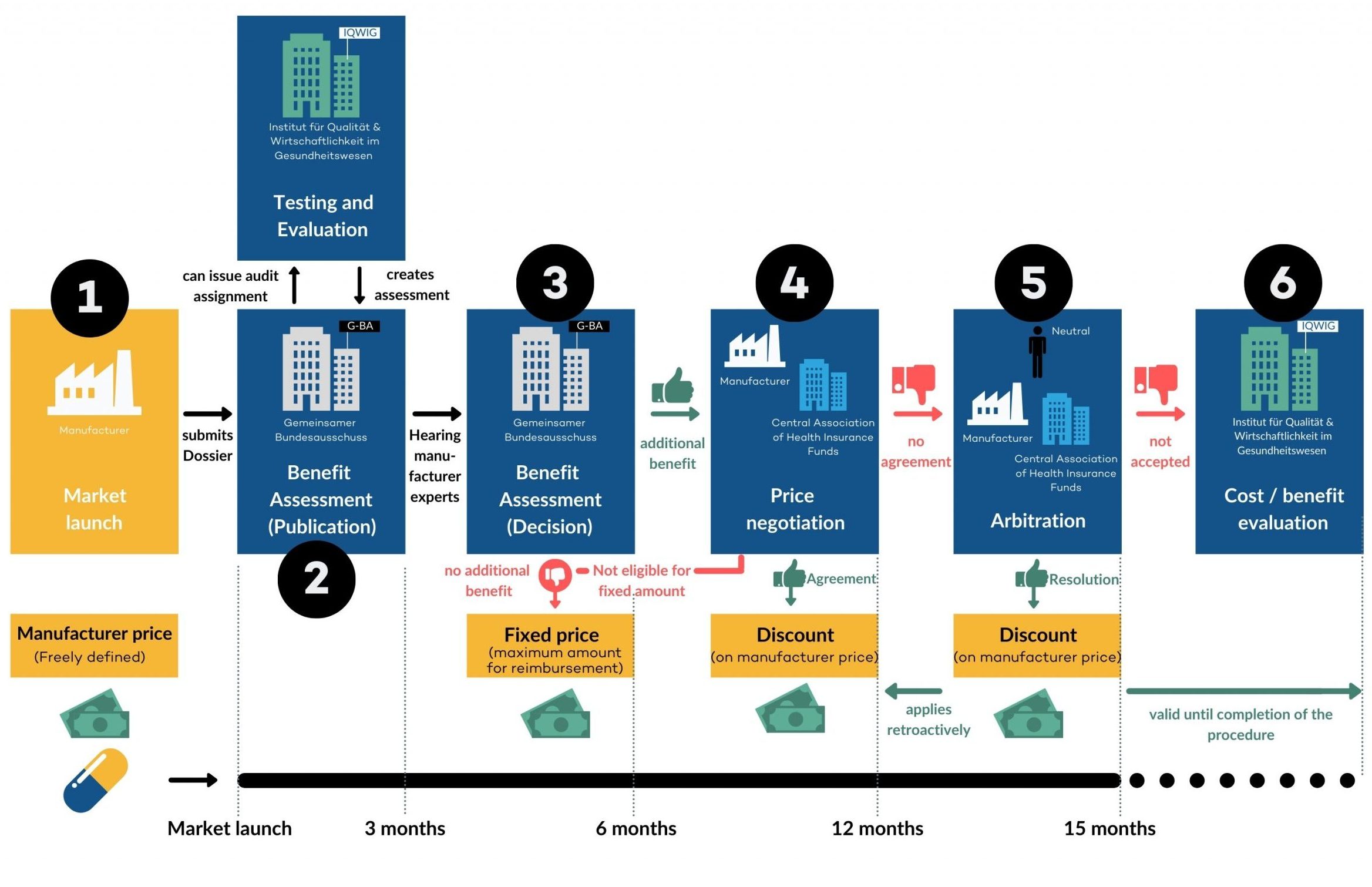
The pharmaceutical company prepares a dossier and submits it to the G-BA when the active ingredient is approved. IQWiG evaluates the evidence, the G-BA determines the additional benefit, and that determination shapes the manufacturer price at which the medicine enters the market. Where an additional benefit is recognised, the reimbursement amount is negotiated; where it is not, the price is capped or the product joins a fixed-amount group.
Three tensions recur: aligning regulatory requirements with G-BA design early, at both national and European level; avoiding price pressure so severe that it discourages launches and innovation; and keeping prescribing authority with physicians, so medication choice follows patient need rather than assessment status.
AMNOG (Arzneimittelmarktneuordnungsgesetz), HTA (Health Technology Assessment), G-BA (Gemeinsamer Bundesausschuss), IQWiG (Institut für Qualität und Wirtschaftlichkeit im Gesundheitswesen), GKV-Spitzenverband (Association of Statutory Health Insurance Funds), SGB V (German Social Code Book V), PZN (Pharmazentralnummer).

.png)